
The sink drained fine. The camera found grease.
What kitchen grease leaves inside a sewer lateral, why a walkthrough drain test can’t tell you, and why a sewer scope is worth adding to your home inspection.
On every inspection I run water. Every sink, every tub, every toilet, long enough to see whether it drains and whether anything backs up. It’s a useful test, and it tells you almost nothing about the pipe that matters most: the sewer lateral, buried under the yard between the house and the city sewer.
A colleague ran a sewer scope on a single-family home in Orange County last week and shared the video with me. By every test you can do from inside the house, the plumbing was fine. The camera told a different story, and the cause was nothing more exotic than years of cooking.
How grease gets into the line
Bacon fat, frying oil, butter, pan drippings, sauces. They go down the kitchen drain warm and liquid, then cool and stick to the inside of the pipe. Hot water and dish soap don’t solve it; they carry the grease a few more feet before it settles. A garbage disposal adds food solids for the grease to bind together.
None of it happens in a week. It’s the slow result of how a household cooks and cleans up, year after year. When you buy a house, you inherit what the last owners left in the line.
What the camera showed
The numbers across the top of each frame are the date, the cable distance and the time. The middle number, marked F, is feet: how far the camera has travelled into the pipe from the access point.
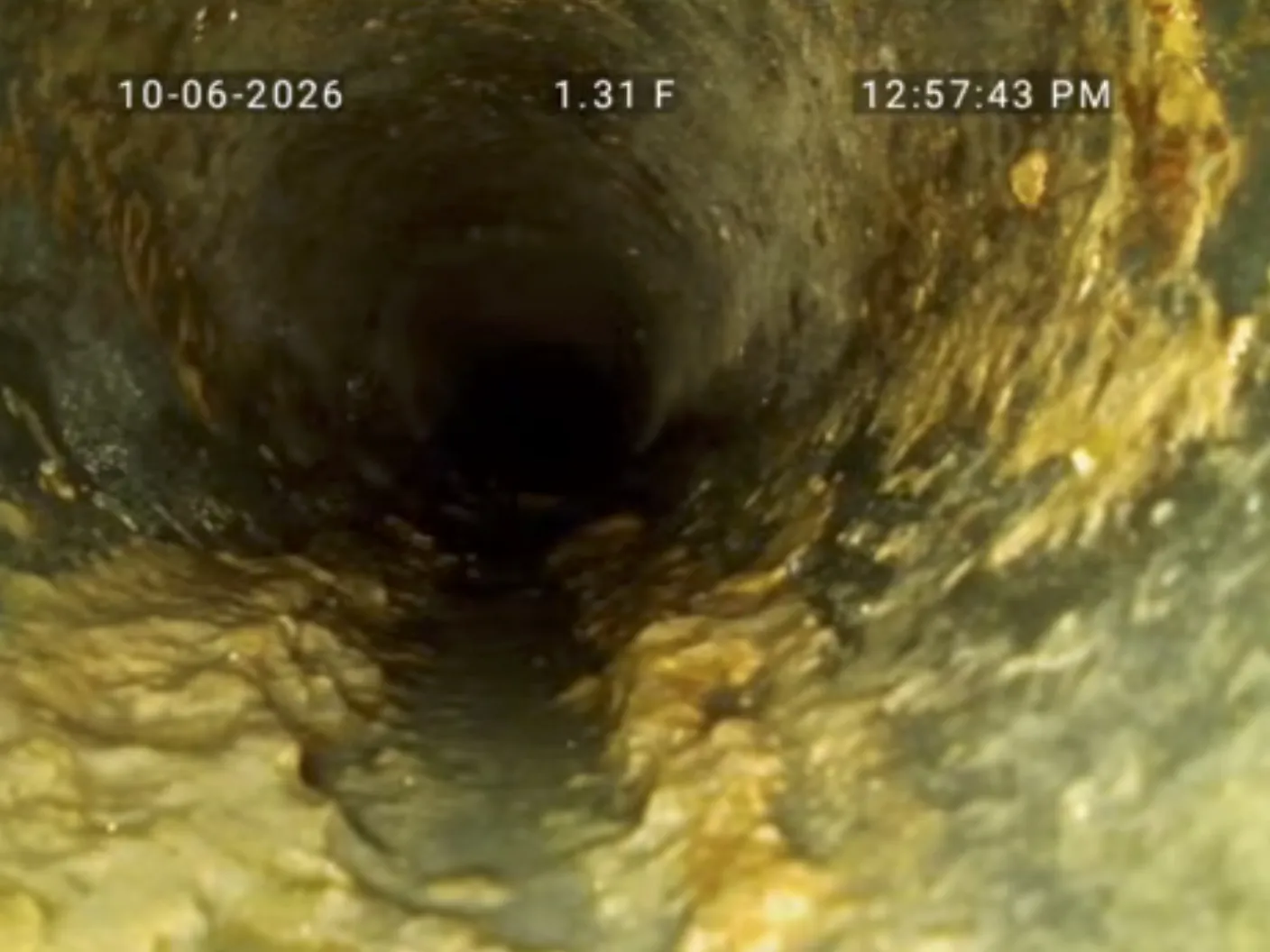
The grease started right at the entry and got heavier around the kitchen connection. Past that, the line cleared up somewhat for a stretch, which is the part of the video that would have reassured anyone watching only the first minute.
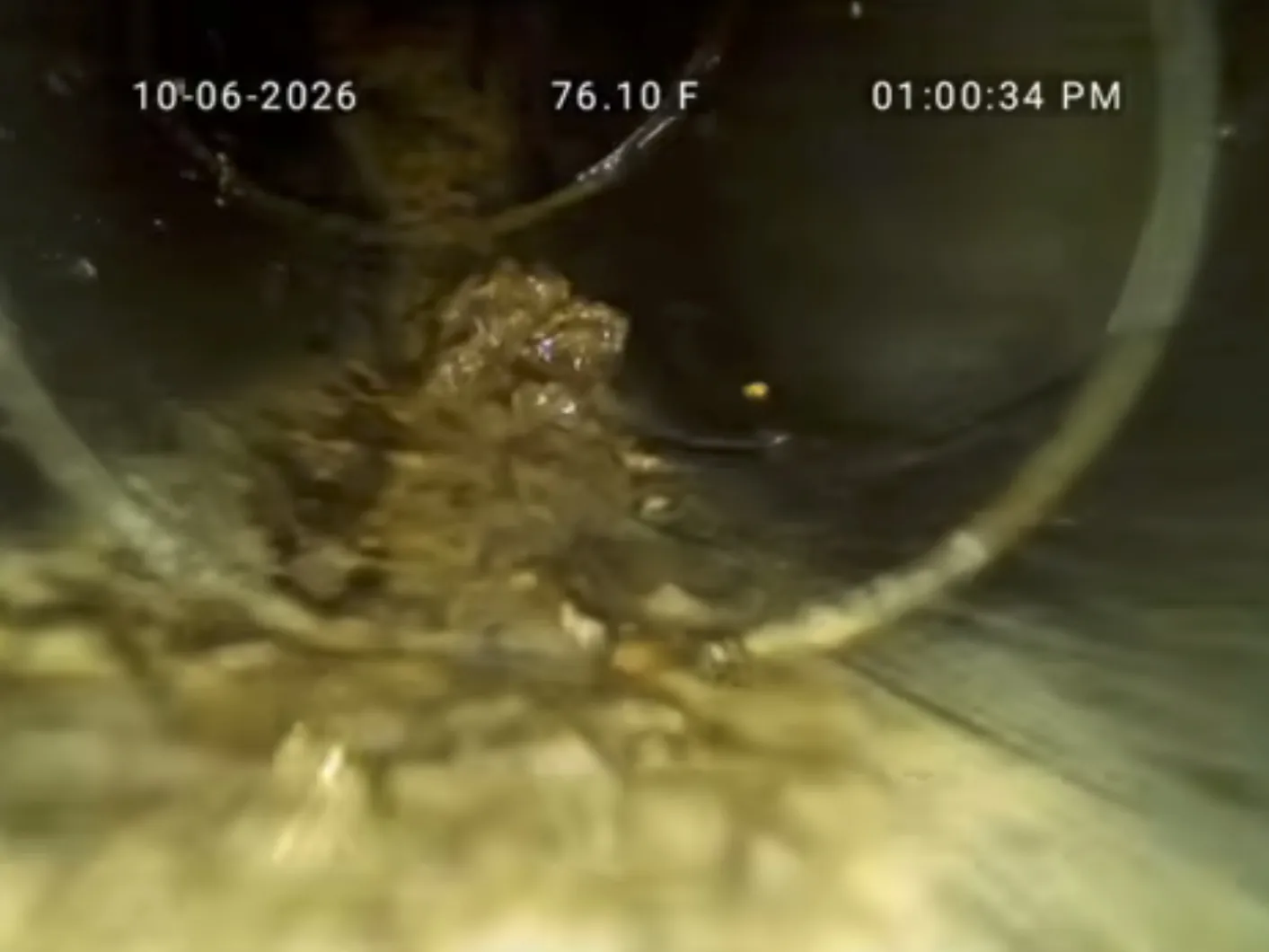
Then, about 75 feet out, it started building up again. The camera continued to the city tap at roughly 107 feet, so the whole run was on video. That’s the point of scoping the full length: problems don’t only live near the house.
Why a drain test can’t catch this
A partly coated pipe still drains. Running a sink for a minute during an inspection, or during a showing, moves a few gallons through a line that may have only a fraction of its original opening left. The trouble comes later: a holiday dinner, a full house, a load of laundry and a dishwasher at the same time. That’s when the backup happens, and by then the house is yours.
Grease also hides things. A coating along the pipe wall can cover a crack, an offset joint or a root intrusion behind it. A heavily coated line sometimes needs to be cleaned and scoped again before anyone can say what condition the pipe itself is in.
It isn’t only an old-house problem
On my pricing page I note that most buyers add a sewer scope on any home built before 1990, because clay, cast iron and Orangeburg pipe all fail with age. Grease is different. It depends on how the house was lived in, not when it was built, and it sticks to plastic pipe just as readily as to clay. A 2005 house with a busy kitchen can have a worse line than a 1960s house with careful owners.
A note on these photos. This blog is normally only my own inspections. These frames come from a scope a colleague ran, and he let me use them because they show grease in a lateral more clearly than anything I could describe. The findings are his. What they mean for a buyer is the same either way.
What I’d do if I were buying this house
A documented finding with video and cable distances is something you can take to the seller during your contingency period. A reasonable ask is to have the line professionally cleaned, usually by hydro jetting, which scours the full pipe wall rather than punching a hole through the blockage the way a cable snake does, and then scoped again to confirm the pipe underneath is sound. Alternatively, ask for a credit to have it done after closing.
What you don’t want is to learn about it from a backup in the first month. At that point it’s your line and your bill.
Adding a sewer scope to your inspection
A sewer scope isn’t part of a standard home inspection, because the lateral is buried and outside what a visual inspection can reach. I offer it as an add-on for $275, done the same visit as your home inspection. The camera runs the full line to the city connection, and the findings, video stills and cable distances go into the same report as the rest of the house. More on how it works on my sewer camera inspection page.
If you’re not sure whether it’s worth it for the house you’re buying, send me the address and the year it was built and I’ll tell you honestly.
Rob Kruger
InterNACHI Certified Professional Inspector, inspecting homes across Orange County, Riverside, San Bernardino and Los Angeles counties. Every inspection is done by me personally.