
Your house may have a backwater valve. This one was rusted open.
What a backwater valve is, why most homeowners have never heard of theirs, and why a sewer camera is the only practical way to know whether it still does its job.
Ask a buyer whether the house they’re purchasing has a backwater valve and you’ll usually get a blank look. Ask the seller and you’ll often get the same one. It’s one of the few parts of a home’s plumbing that exists for a single bad day, and it can sit unnoticed for decades in between.
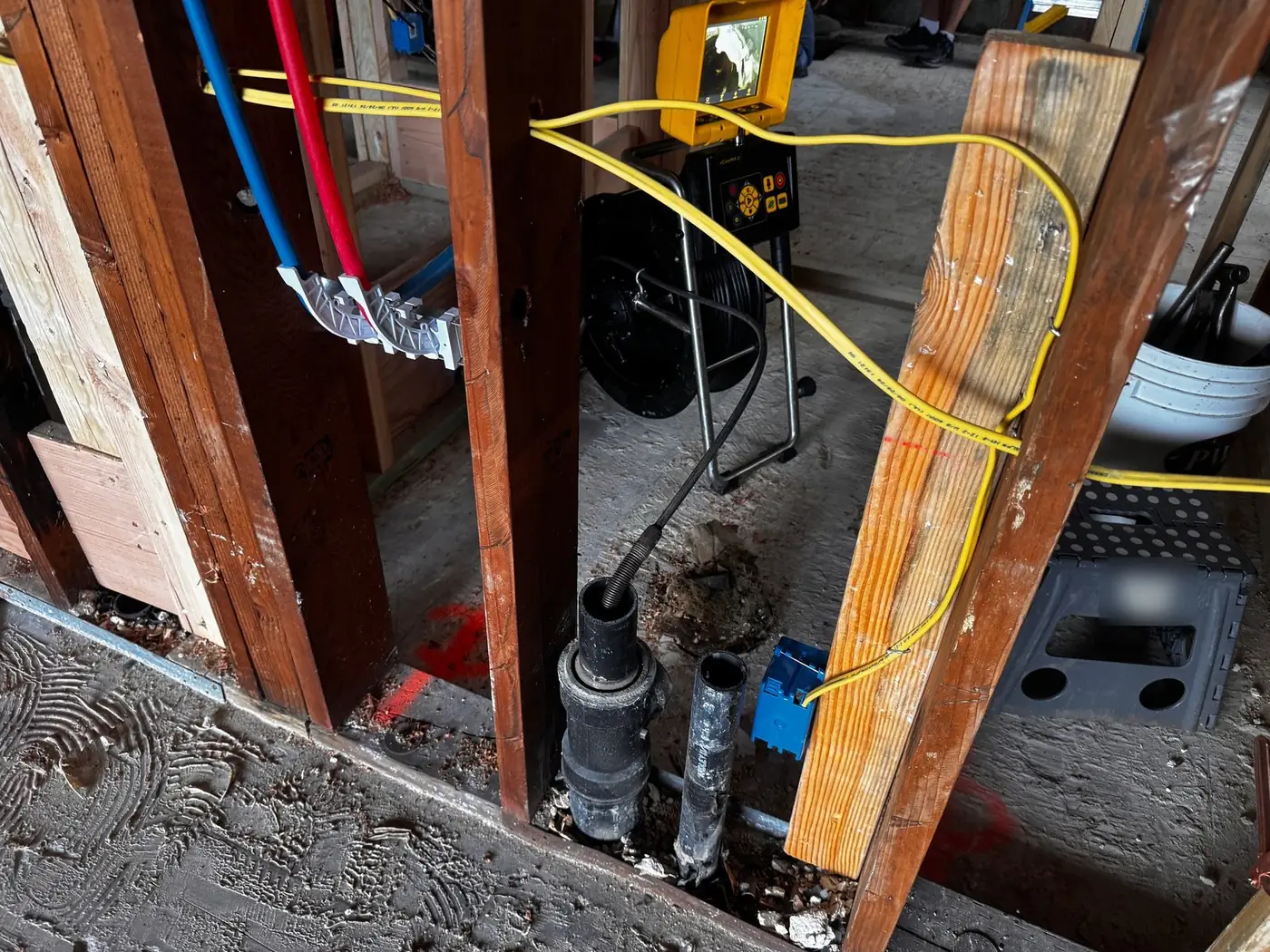
Last week I ran a sewer camera for a contractor on a remodel. The job was a locate: find where the line runs before the floor work went any further. Sixteen feet in, the camera passed through the home’s backwater valve, and the valve wasn’t doing what anyone would have assumed it was doing.
What a backwater valve does
Your house drains into a sewer lateral, and the lateral drains into the city main in the street. Most of the time everything flows one way. But when the main backs up, from a blockage, a heavy storm or a problem at the city’s end, the sewage has to go somewhere. In a house whose drains sit low relative to the street, “somewhere” can be your lowest shower, floor drain or toilet.
A backwater valve is a one-way gate in the line. Inside is a flap that swings open to let your wastewater out and is meant to drop shut when flow tries to come the other way. California’s plumbing code calls for one where fixtures sit below the level of the next manhole upstream, and plenty of homes on sloped lots or with downstairs bathrooms have one for that reason.
Backwater or backflow? People often call this a “backflow valve,” and the names get mixed up all the time. A backwater valve is on the sewer line and keeps sewage from coming back in. A backflow preventer is on the water supply and keeps irrigation or other water from getting into your drinking water; that’s the device that gets an annual test tag. This article is about the sewer one.
Why most owners don’t know they have one
The valve is part of the buried line. Usually the only sign of it on the surface is a small access lid near the house, and those get covered by mulch, pavers, a planter or a new patio slab. Nothing about it shows up when you run the sinks or flush the toilets. It rarely appears on a seller’s disclosure, because the seller doesn’t know either. A standard home inspection is visual, and the inside of a sewer line isn’t something a visual inspection can reach.
So the first time many owners learn about their backwater valve is the day it was supposed to close and didn’t.
What the camera showed
The numbers across the top of each camera frame are the date, the cable distance and the time. The middle number, marked F, is feet: how far the camera has travelled into the pipe from where it went in.
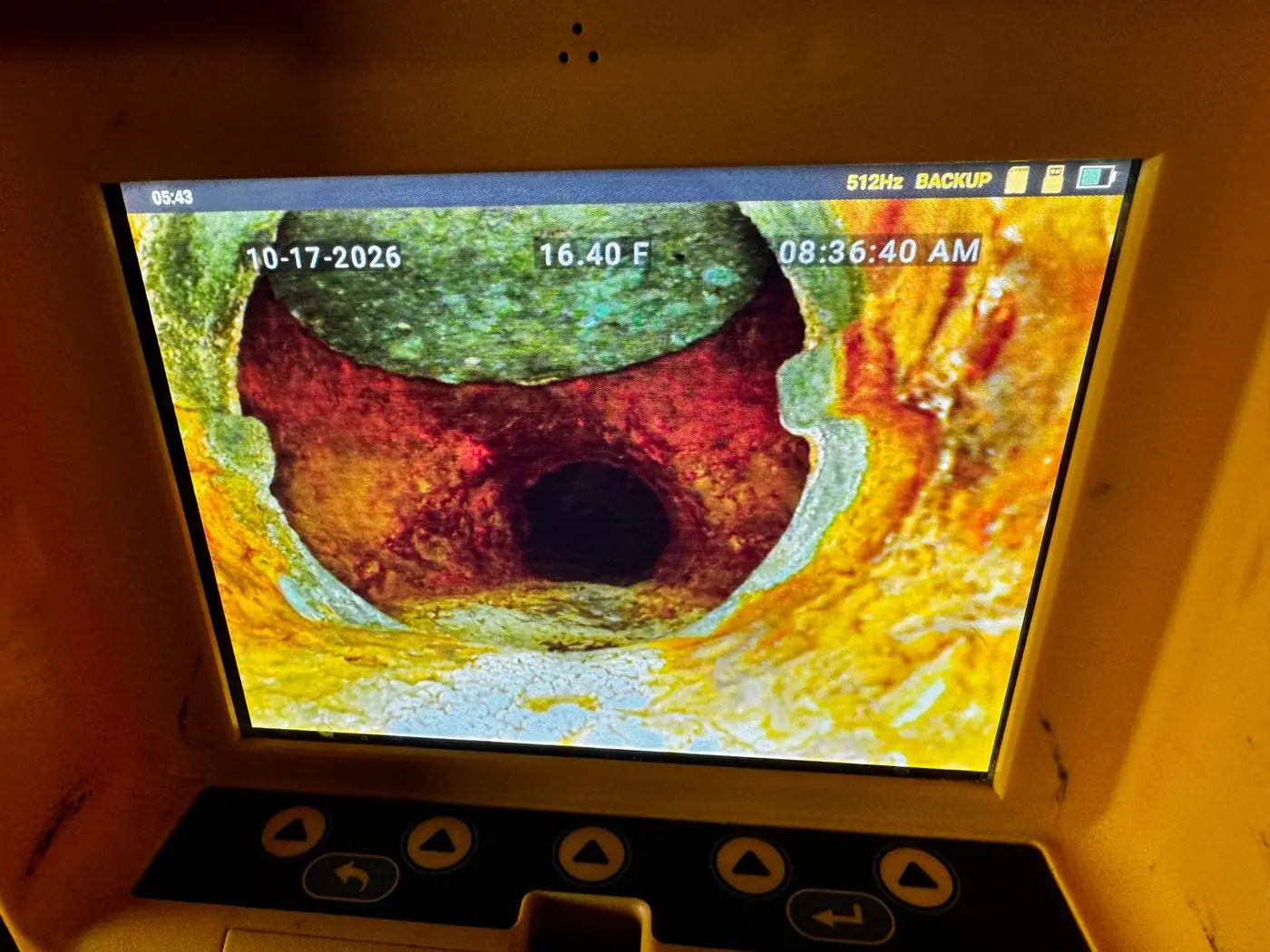
This was an older cast iron valve, and its flap had rusted open. It wasn’t sitting ready to swing shut. It was fixed up against the top of the pipe. Wastewater still leaves the house without any trouble, so nothing seems wrong from inside. But with the flap stuck open, the valve can’t stop anything coming the other way. Debris can come back into the system, which is exactly what the valve was put there to prevent.
Why the drain test can’t tell you
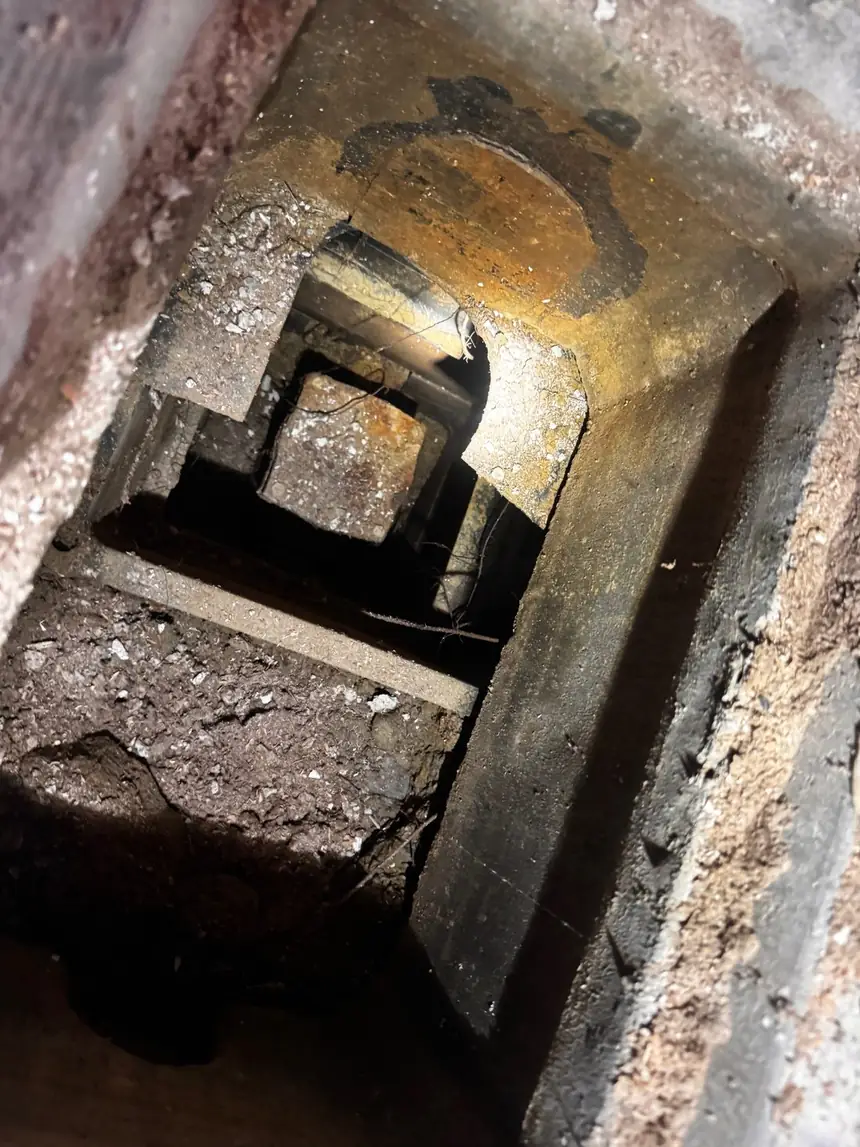
A flap stuck open drains perfectly. A flap stuck shut usually announces itself with slow drains or backups, so it tends to get found. The open one is the quiet failure: the house behaves normally every single day, and the owner believes they’re protected right up until the city main backs up. You can sometimes look at a valve through its access lid if you can find the lid and get it open. On a lot of properties that isn’t practical, and a camera is the only way to see the flap itself.
If you’re not sure whether the house you’re buying has one, I can usually tell you once the camera is in the line. Questions before you book? Call me at (714) 992-6363.
A note on this job. This one was my own camera work, a locate for a contractor rather than a pre-purchase inspection, so there’s no buyer in this story. The valve behaves the same way whichever kind of job finds it.
What I’d do if I were buying this house
First, find out whether the house has a backwater valve at all, and where its access is. Then have it looked at on camera. If the flap is seized open or shut, or the valve is badly corroded, that’s a documented finding you can take to the seller during your contingency period. A licensed plumber can tell you whether the valve should be serviced or replaced. A reasonable ask is for the seller to have that done, or a credit so you can have it done after closing.
After you move in, keep the access lid uncovered and know where it is. A valve nobody can reach is a valve nobody maintains.
Adding a sewer scope to your inspection
A sewer scope isn’t part of a standard home inspection, because the lateral is buried and out of reach of a visual inspection. I offer it as an add-on for $275, done the same visit as your home inspection. The camera runs the full line to the city connection, and if there’s a backwater valve along the way, you’ll see it. Findings, video stills and cable distances go into the same report as the rest of the house. More on how it works on my sewer camera inspection page, or read what the camera found in a line full of kitchen grease.
If you’re not sure whether a scope is worth it for the house you’re buying, call (714) 992-6363 with the address and the year it was built, and I’ll tell you honestly.

Rob Kruger
InterNACHI Certified Professional Inspector, inspecting homes across Orange County, Riverside, San Bernardino and Los Angeles counties. Every inspection is done by me personally.