
Walking a tile roof is how you break a tile roof.
Some roofs can't be walked without damaging them, and some can't be walked safely at all. Flying gets closer detail than a ladder ever does, and nothing gets cracked on the way.


InterNACHI Certified Drone Pilot and Roof InspectorTrained both to fly the roof and to read what the photos show once it’s flown.
When I fly instead of climbing
Concrete and clay tile crack under foot, and a cracked tile is exactly the kind of defect you hired someone to find rather than create. Steep pitches and tall two-storey roofs are a safety question instead. In both cases a ladder view from the eaves tells you about the first four feet of roof and nothing else.
Flying solves it. I can hold position over a valley, a ridge or a chimney and photograph it close enough to read, then move to the next one without ever putting weight on the roof.
The aerial images go into the same report as everything else, so the roof section reads like the rest of the inspection rather than a separate document.
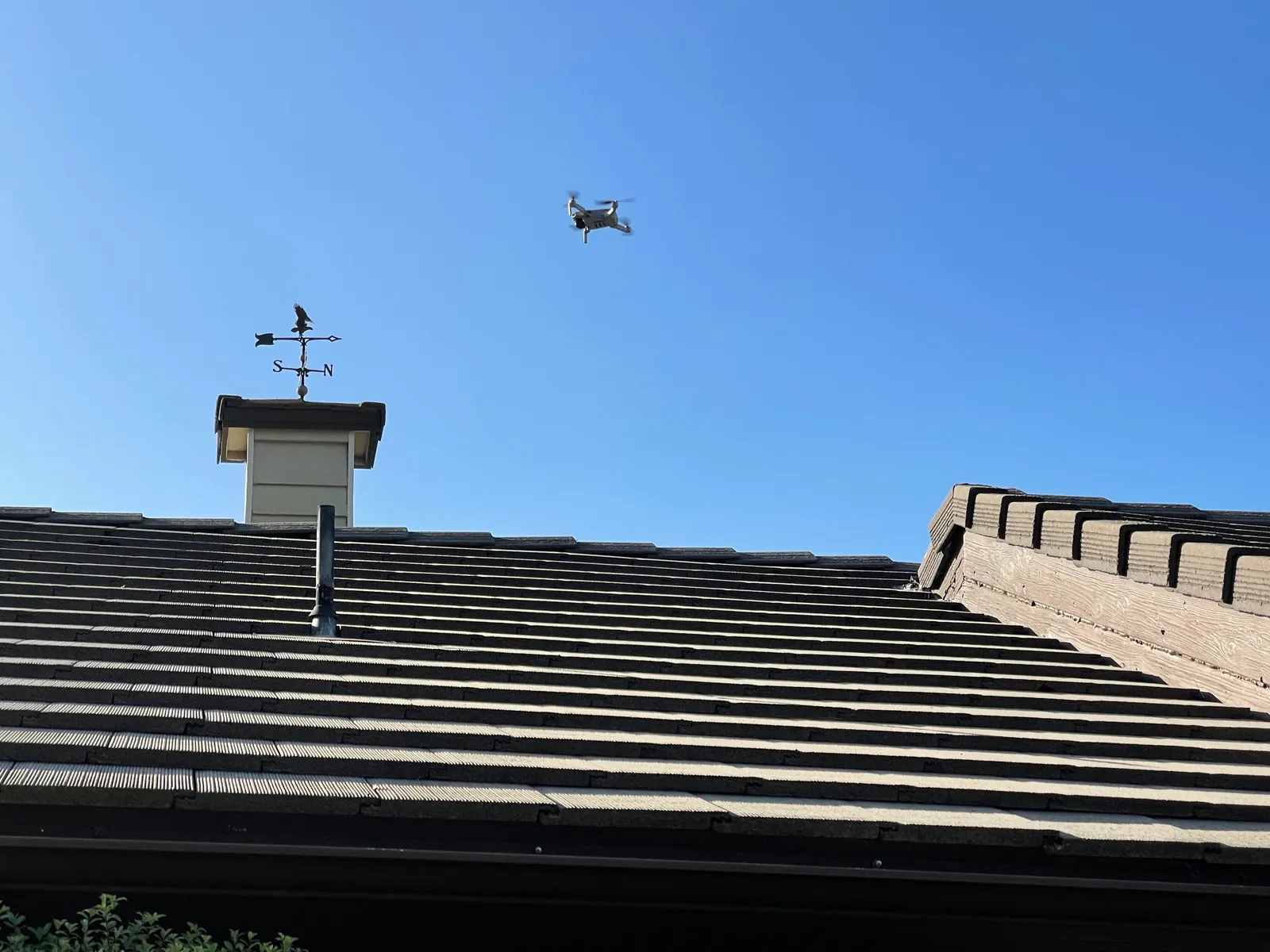
What the aerial view shows
-
Tile and shingle condition
Cracked, slipped and previously repaired tiles, lifted or missing shingles, and the patches where somebody has already been up there.
-
Flashings and penetrations
Valleys, sidewall flashing, vent boots and skylight perimeters — the places roofs actually leak, most of which sit well away from the edge.
-
Chimney and crown
The crown, cap and the flashing where the chimney meets the roof. Rarely visible from the ground and a common source of water in the ceiling below.
-
Ridge, hips and overall geometry
Sagging along a ridge line, uneven planes, and the general shape of a roof that's carrying more weight than it should.
-
Gutters and drainage
Where water is meant to go and where it's actually going, including debris load and separated joints you can't see from below.
-
Solar and rooftop equipment
Mounting penetrations, standing water around panels and condition of rooftop units, without anyone walking between the arrays.
The drone survey is included at no extra charge whenever the roof calls for it. It isn't a premium option and I won't present it as one on the day — if flying is the right way to inspect the roof you have, that's how I inspect it.
Where flying doesn't help
Wind, rain and heavy tree cover can all make flying a bad idea, and dense canopy over a roof simply blocks the view. When that happens I'll say so and inspect the roof by whatever means is safe and available, rather than filing a set of photographs that don't show anything.
A walkable roof in good condition also doesn't need it. Composition shingle at a shallow pitch is usually better inspected from on top of it.
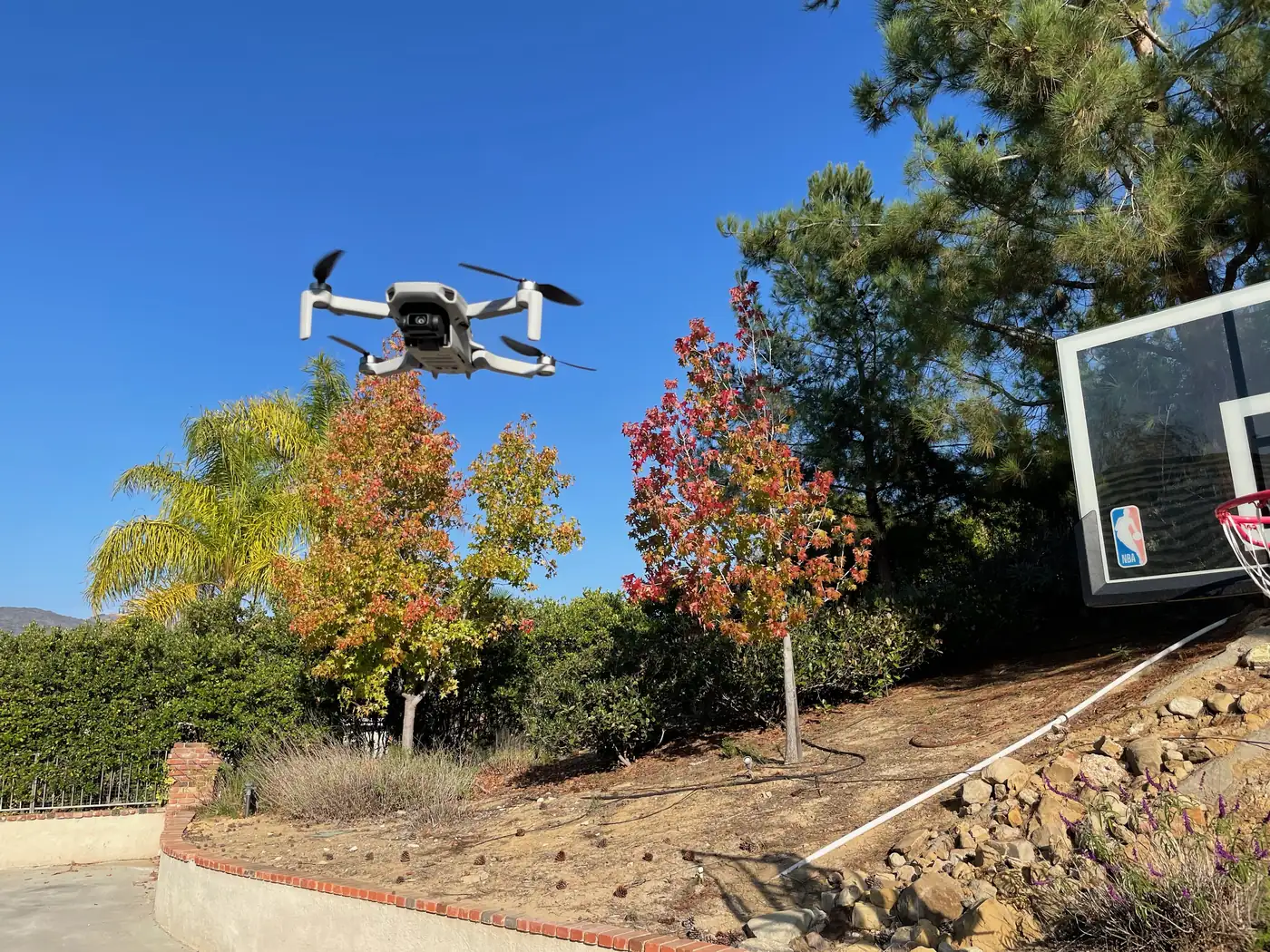
Tile roof? Two storeys?
Then the drone is coming out, and it's already in the price. Tell me the roof type when you book and I'll plan the inspection around it.