
Finding where the water is getting in.
Water rarely announces itself where it enters. It travels along framing and shows up two rooms away, months later. A moisture inspection works backwards from the evidence to the actual entry point.
InterNACHI Certified Moisture Intrusion InspectorTrained in how water gets into a building, how it travels, and how to trace it back to where it started.
What's covered
An infrared scan to find the suspect areas, then meter readings to confirm them, then a working survey of every route water takes into a building.
- Infrared scan of suspect areas
- Meter readings in walls, ceilings and floors
- Second-storey plumbing above the finding
- Roof flashings and penetrations
- Window and door exteriors
- Exterior wall surfaces
- Gutters, or the absence of them
- Grading and site drainage
When it's worth booking
A stain on a ceiling is the obvious trigger, but the useful cases are usually less dramatic — a seller who mentions a leak was fixed years ago, a re-roof done between listings, stucco cracking on a wall that faces the weather, or sprinklers that have been hitting the same spot for a decade.
The meter reading is what separates an old dry stain from something still active. That distinction changes what you do next, and it's not something you can judge by eye.
I document where water is entering, how far it has travelled and what it has reached. Where a finding needs a specialist — a roofer, a plumber, a licensed contractor — I say so plainly and point you to the right trade rather than guessing at a cause.
What you get
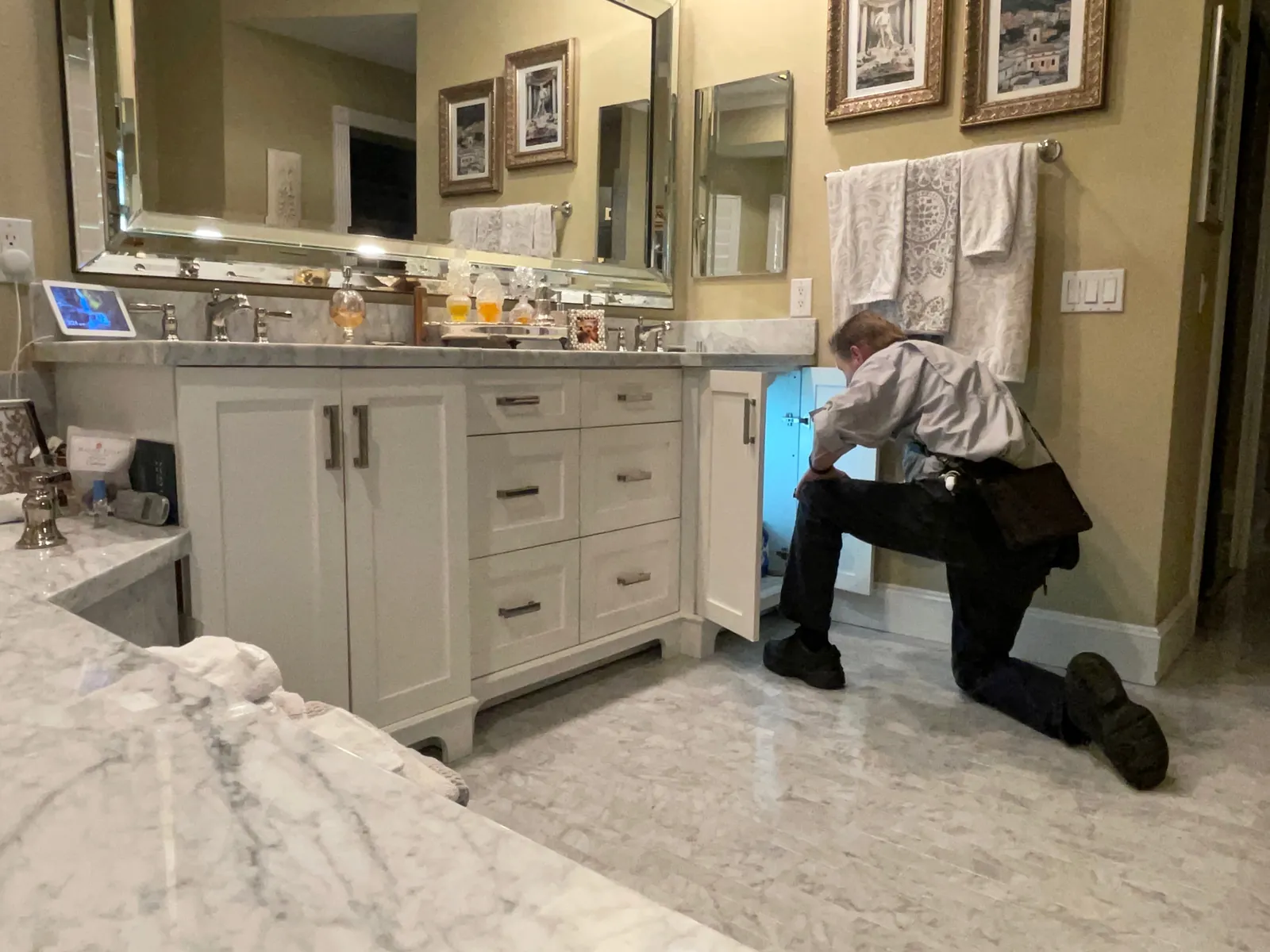
Meter readings with locations, infrared images paired with standard photos, and a written account of the likely path the water is taking. Enough for a contractor to act on, and enough to raise during a contingency period.
I hold InterNACHI Moisture Intrusion certification, which is the training behind how these findings get read and recorded.
Other services
Seeing something you can't explain?
Send me a photo of the stain or the crack and roughly when you first noticed it. I'll tell you whether it warrants a full moisture survey or whether it can wait for the standard inspection.