
Everything above it depends on it.
Foundations are covered in every inspection I do. When a property shows signs of movement — or when you already suspect something — it's worth looking at on its own, with more time and a camera that fits where I don't.


InterNACHI Certified Structure & Foundation and Crawlspace InspectorTrained in slab and raised foundations, the framing they carry, and the crawlspaces underneath.
The crawl bot
Raised foundations have places a person cannot reach. Low clearance, ducting in the way, a pier in the wrong spot — and the inspector either crawls as far as is sensible and reports on the rest by inference, or doesn't go in at all.
I send a camera robot instead. It runs the full underside and brings back high-definition photo and video of areas that would otherwise be described as inaccessible. You see the footage; you're not taking my word for what's under there.
It also means I can inspect a crawlspace properly without disturbing insulation, ducting or vapour barrier on the way through.
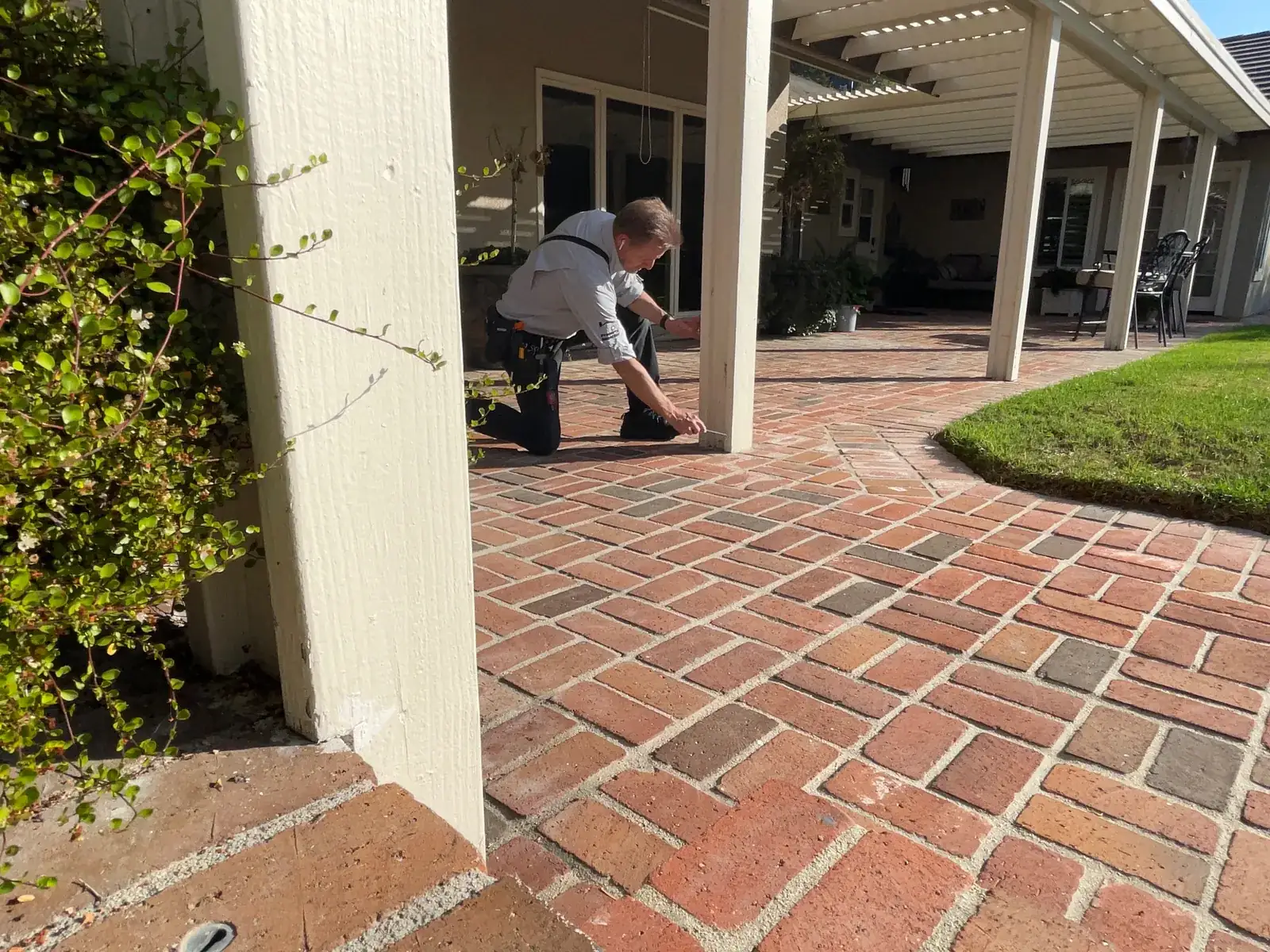
What I'm looking at
Slab or raised changes the whole approach, so the first job is establishing which, and what's been done to it since.
-
Cracking, and which kind
Not all cracks mean anything. Width, direction, whether it runs through a corner and whether it has moved recently are what separate shrinkage from settlement.
-
Evidence in the finishes
Doors that won't latch, sloping floors, separation at the crown molding, stair-stepping in stucco or brick. The structure often reports itself upstairs before anything is visible below.
-
Posts, piers and girders
On a raised foundation, the condition of the support framing under the floor matters as much as the perimeter. Rot, crushing, missing shims and posts off their footings all show up down there.
-
Moisture and ventilation
Standing water, damp soil, a missing vapour barrier or blocked vents. Persistent moisture under a house works on the framing above it.
-
Drainage and grading
Where water goes when it leaves the roof. Ground sloping back toward the house, downspouts discharging at the foundation and failed area drains cause more movement here than anything else.
-
Soil conditions
Much of inland Southern California sits on expansive clay that swells and shrinks with the seasons. Combined with seismic movement, it puts foundations here under loads that gentler climates don't.
I'm an inspector, not a structural engineer. I can document what's there and tell you what it usually indicates. Where a condition warrants an engineer's judgment — a calculation, a stamped opinion, a scope of work — that recommendation goes in the report, and it's the right next step rather than a second opinion from me.
What you get
Photographs and video of the underside, measurements and locations for anything found, and a written account of what the pattern suggests. InterNACHI certified in Structure and Foundation and in Crawlspace inspection.
Other services
Worried about a crack?
Photograph it with something for scale beside it and send it over. Most of what people worry about turns out to be cosmetic, and I'd rather tell you that on the phone than sell you an inspection you don't need.